About the Project


The founding of CAP
The Culver Archaeological Project (CAP) brings together the local community, students, trained archaeologists and volunteers to investigate the historic environment of the Upper Ouse Valley. The project is led by Robert Wallace, who holds a postgraduate degree in Field Archaeology from the University of Sussex and is a corporate member of the Chartered Institute for Archaeologists (CIfA).
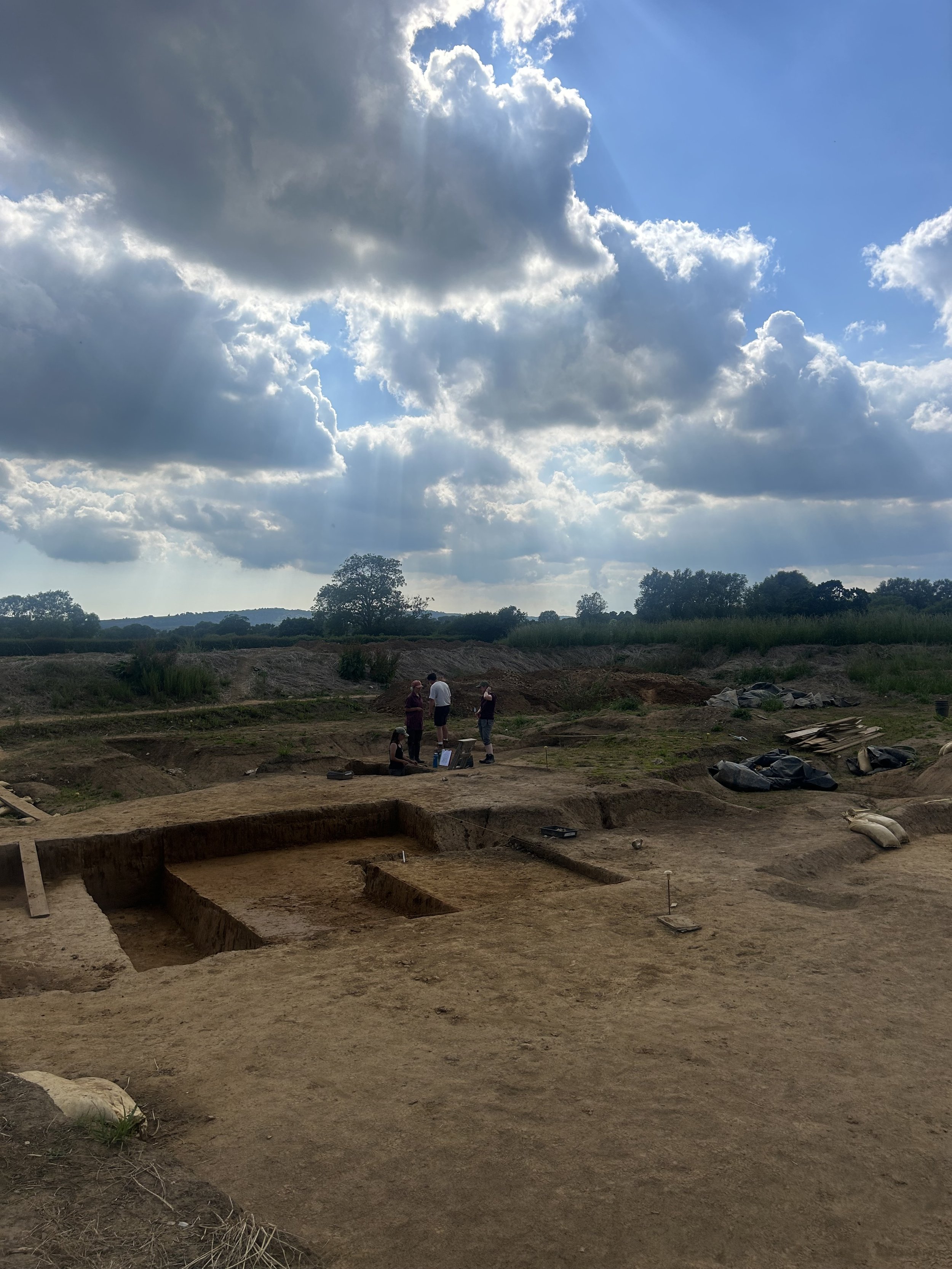
CAP was established by Rob in 2005 to investigate the area surrounding the Barcombe Roman villa complex and has since expanded across the wider alluvial plain of the Upper Ouse Valley in the parishes of Barcombe and Ringmer. So far, the project has uncovered an extensive Romano-British settlement at Bridge Farm, including Roman roads and a rich assemblage of archaeological and environmental finds, with new discoveries continuing to emerge through ongoing fieldwork.

Initial Investigations
In CAP’s first year, Rob discovered a substantial Roman road running along the western side of the River Ouse. Investigation of the road and its surrounding landscape continued across Culver and Cowlease Farms until 2010. From the outset, CAP has aimed to combine high standards of archaeological research with active community involvement, giving local people the opportunity to take part in the discovery and interpretation of their landscape, heritage and archaeology. Alongside targeted open-area excavation, the project has employed magnetometry, resistivity survey and supervised metal detecting to investigate the wider area.
The investigation of the Romano-British settlement at Bridge Farm developed from this broader research into the Ouse Valley. In 2011, geophysical survey undertaken by geophysicist David Staveley along the course of the London to Lewes Roman road led to the discovery of the Roman-period settlement at Bridge Farm. This in turn helped secure substantial funding from the Heritage Lottery Fund, enabling CAP to work with AOC Archaeology during the 2013 season. Four open-area trenches were excavated, with the funding also supporting post-excavation work and an extensive programme of community engagement.

Supporting the Excavation and CCCU Student Training
From 2014, volunteers, students and campers contributed a modest participation fee, while donations from visiting groups helped cover the basic costs of the project. In 2015, a fieldwork training course was introduced at the site, primarily for students from Canterbury Christ Church University, with some additional places available for individuals seeking further archaeological training. This established Bridge Farm as an important setting for practical student training while also providing a more secure financial basis for continued excavation and specialist post-excavation work. The large volunteer base created in 2013 is still very active and, alongside each new cohort of university students, is the backbone of the project.